Gift days around the world › Joulupukki
24 December · Finland, Estonia
Joulupukki: a knock at the door on Christmas Eve.
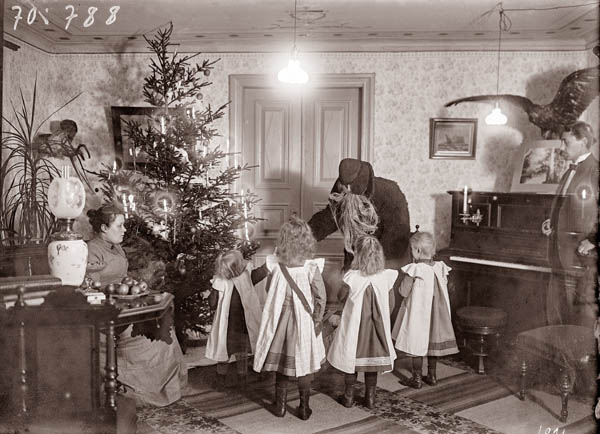
In Finland nobody has to sneak down a chimney. On the afternoon or evening of 24 December Joulupukki knocks on the door, steps in and asks: “Onko täällä kilttejä lapsia?”, are there any good children here? Then he hands out the presents himself.
A goat’s name
Joulupukki means Yule goat. In old Nordic custom young men dressed in furs and horns went from house to house at Christmas, asking for food and drink and frightening the children. Over the nineteenth and twentieth centuries the goat turned into a kindly old man in red, but kept the name.
Korvatunturi and Rovaniemi
Finnish children learn that Joulupukki lives on Korvatunturi, a fell in Lapland near the Russian border, shaped like an ear so that he can hear what children wish for. Santa Claus Village in Rovaniemi, on the Arctic Circle, receives visitors and letters all year.
Who plays him
In many families an uncle, a neighbour or a hired Joulupukki knocks on the door, and somebody in the family always seems to be out of the room at the time. In Estonia children say a poem or sing a song to Jõuluvana before they get their present.
Draw names for Christmas with Shake the Hat
Before Joulupukki empties his sack, a family can draw names so each grown-up buys for one person, not for everyone. One link, a name each in private, a budget in euros, and a few ideas each.
Questions people ask
When does Joulupukki come?
On Christmas Eve, 24 December, usually in the afternoon or early evening.
Why is Joulupukki called a goat?
Joulupukki means Yule goat, after an old custom of men dressed as goats who went from house to house at Christmas.
Where does Joulupukki live?
On Korvatunturi, a fell in Finnish Lapland, according to Finnish tradition.
More gift days
Gift days · Secret Santa · Couples kept apart · Questionnaire · Office Secret Santa · Wish lists · Group presents · How it works · AI · Terms · Privacy
Run by elves, unicorns and other friendly beasts